
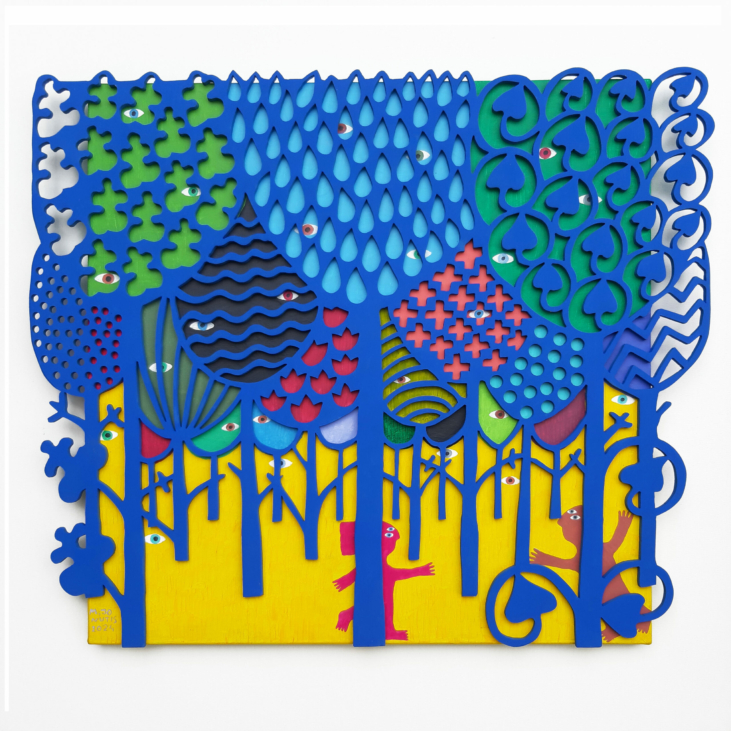
10.10.–15.11.2026
There are peoples of the sea and peoples of the forest, and there are peoples of the desert. Estonians are both a sea people and a forest people: the forest is close and dear to us. We do not always appreciate the richness that surrounds us. Yet even peoples who have little forest left still feel its pull. The forest frightens and attracts us at the same time.
In the stories told by people of old and in written fairy tales, too, the forest has two faces. Dangerous, gloomy woods have been home to all kinds of dark forces: witches and giants who do and wish nothing but evil. Flickering lights lead lonely wanderers astray; wilful, capricious fairies may tease travellers who fall under their spell and carry them away, only to send them back a hundred years later to a world changed beyond recognition, where the enchanted must live on as lonely souls, belonging neither to this world nor the other. We also know the little forest cottages with their frightening looks but kindly old inhabitants, who help and guide travellers with a just mind and a compassionate heart who have lost their way. Even the animals of the forest have two faces. There are fierce, savage predators who would not hesitate to bring down a traveller out too late and devour them for supper in the cruellest way. And there are friendly animals who, in gratitude for a thorn pulled from a paw, come to help in times of need with their whole kin, and often even save a life.
The ancient Estonians’ attitude towards the forest was rather favourable. The forest offered protection from foreign rule and armies, and a wise person found remedies there against illness. The forest fed and sheltered, the forest gave a roof over one’s head. The evil of the forest always fell short of the evil of people, and in the forest salvation awaited. In the old grey days the Forest Elder often crossed the path of a woodcutter or hunter, putting their kindness and sense of justice to the test. Kindness was rewarded with a way home found again or with unexpected riches; deceit and carelessness were punished more or less harshly. Wise women and wise men have always lived in the forest or at its edge – they frightened the villagers a little, but helped and healed them in real trouble. Forest Elders who give justice to the just and punishment to the deceitful would be useful in today’s world as well. We have seen far too much impunity and carelessness towards the forest. Today it is not people who need protection from the forest, but the forest that needs protection from human greed and acquisitiveness.
The forests of Europe are mostly safe nowadays; the gloomy woods have become more of a memory, but the magic of the forest has survived. The mystery, the magic and the dream of the forest remain. That is why the artists I invited took to the theme easily and gladly agreed to introduce their own magical forest to us. Every person has their own forest, and every forest has its own magic. This is exactly what can be seen in the pictures of this exhibition.
The exhibition features illustrations by 17 Estonian and 31 foreign artists – from 15 countries in total.
Participating from Estonia: Regina Lukk-Toompere, Anne Linnamägi, Catherine Zarip, Piret Mildeberg, Jüri Mildeberg, Piret Niinepuu-Kiik, Katrin Ehrlich, Ulla Saar, Kadi Kurema, Urmas Viik, Kadri Ilves, Anne Pikkov, Kertu Sillaste, Tuulike Kivestu-Rotella, Kristi Kangilaski, Kaia Rähn, Viive Noor and Marja-Liisa Plats.
Other countries are represented by Virpi Talvitie (Finland), Ana Juan, Ignasi Blanch, Josep Antoni Tàssies and Laura Pérez Granel (Spain), Rebeka Luciani (Argentina), Judith Clay, Olaf Hajek and Stefanie Harjes (Germany), Hanna Karaleva (Austria), Martin Jarrie (France), Joanna Concejo (Poland), Lena Revenko and Natalie Pudalov (Israel), Gundega Muzikante, Anita Paegle, Aleksejs Naumovs, Arta Ozola-Jaunaraja, Gita Treice and Anda Strautniece (Latvia), Glenda Sburelin, Andrea Calisi, Daniela Costa, Daniela Iride Murgia, Matteo Gubellini, Anna Forlati and Sergio Olivotti (Italy), Marius Jonutis (Lithuania), João Vaz de Carvalho (Portugal), Alefes Silva (Colombia) and Natalia Mirzoian (Armenia).
Museum of New Art, Rüütli 40a, Pärnu. The exhibition is supported by the City of Pärnu and the Cultural Endowment of Estonia.
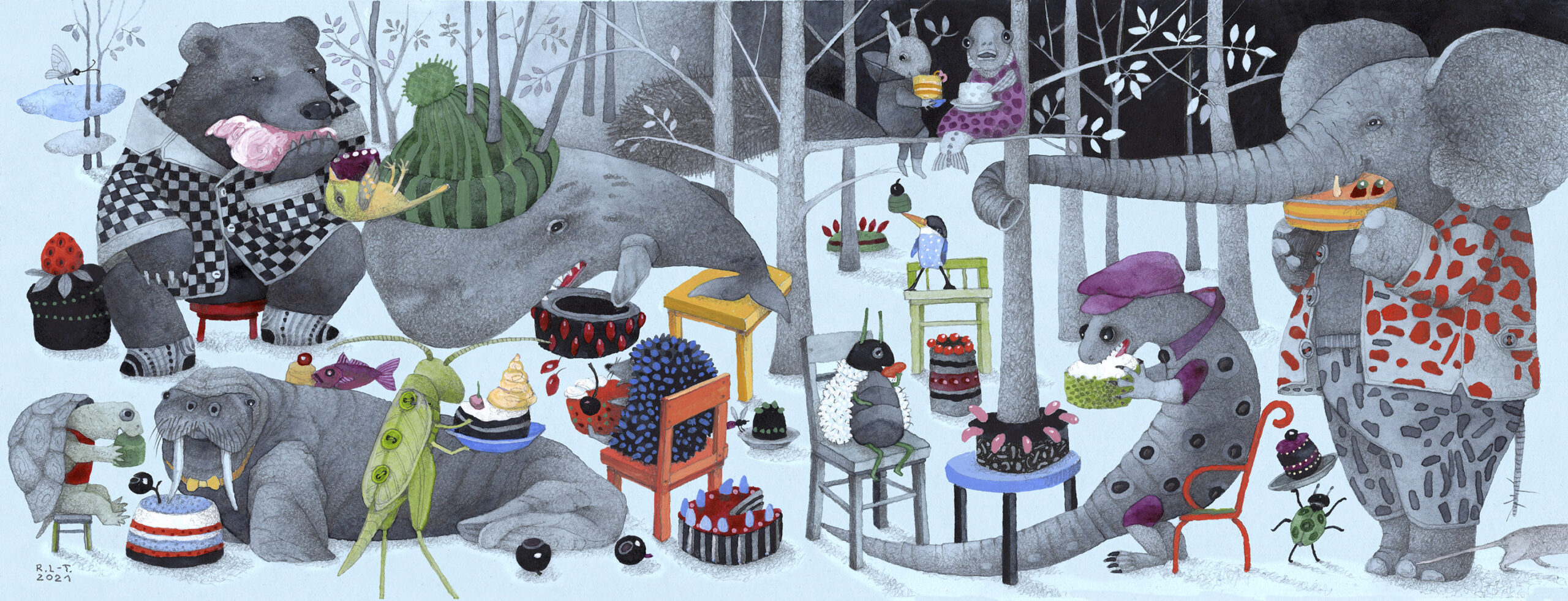
„Orava tantsupidu”
“Squirrel’s Dance Party“
Pencil, aquarelle on paper
2022
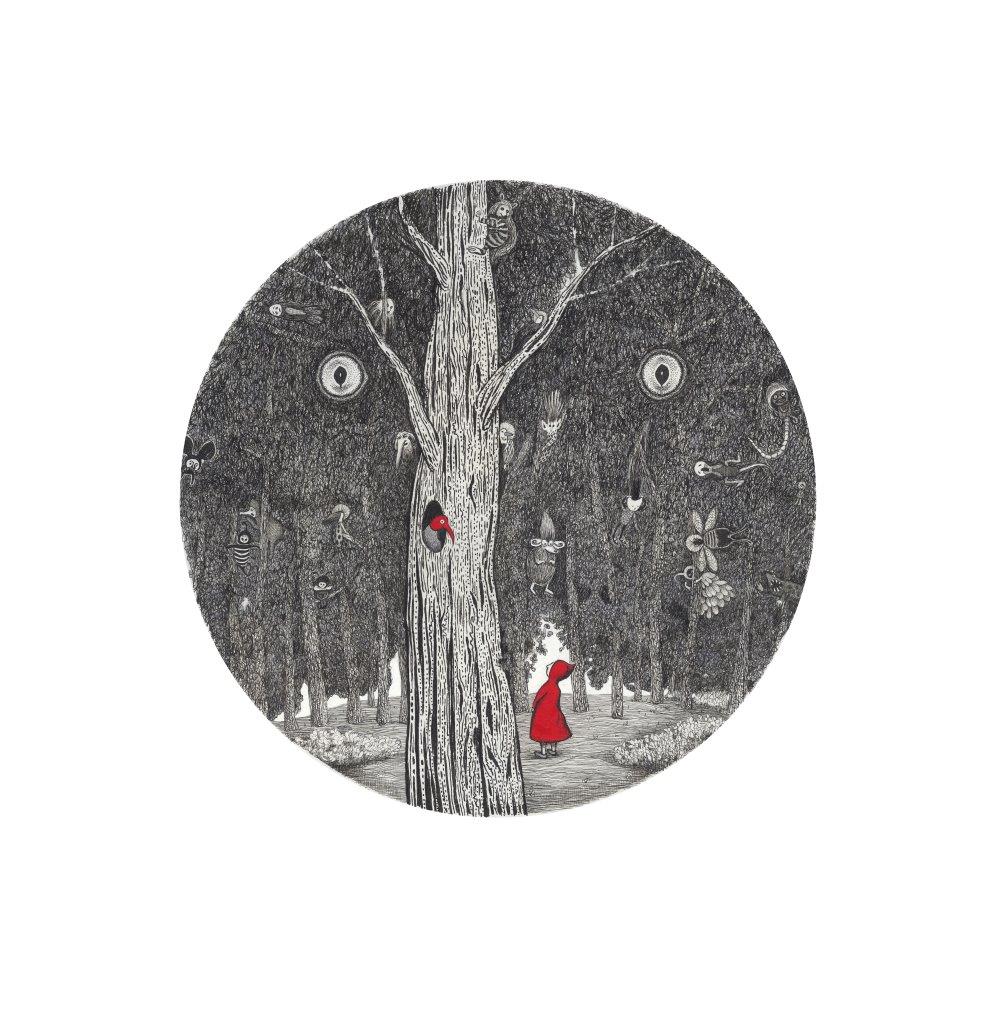
Kadi Kurema
ILLUSTRATION
„Maagiline mets“
“Magical Forest”
Ink, gouache, watercolour
2024